

Notice: Function _load_textdomain_just_in_time was called incorrectly. Translation loading for the poolax domain was triggered too early. This is usually an indicator for some code in the plugin or theme running too early. Translations should be loaded at the init action or later. Please see Debugging in WordPress for more information. (This message was added in version 6.7.0.) in /home/u662845864/domains/aaolindia.com/public_html/wp-includes/functions.php on line 6131
PTSA - Aromatic Allied & Organics Pvt Ltd

Shopping cart

Category: PTSA

What Is the Sulphonation Process Applications, Benefits & Industrial Uses - AAOL India

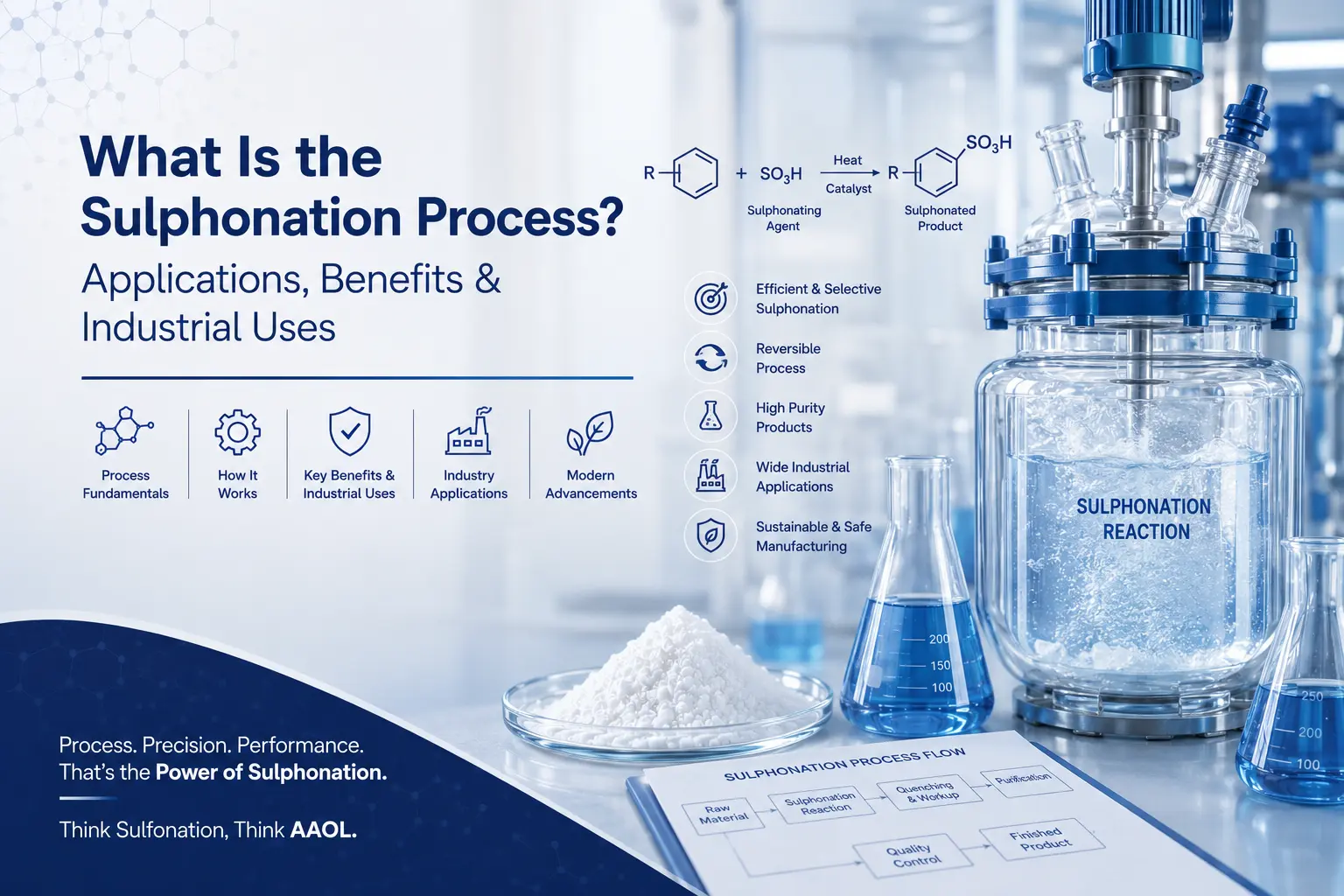
What Is the Sulphonation Process? Applications, Benefits & Industrial Uses

The Sulphonation Process is one of the most important reactions in industrial chemistry, enabling the production of detergents, pharmaceuticals, dyes, agrochemicals, and specialty chemicals. Discover how sulphonation works, why sulphonation is reversible, and why this reaction remains critical for modern manufacturing

READ MORE
PTSA in Organic Synthesis Why It Remains a Preferred Catalyst for Modern Chemical Manufacturing - AAOL India

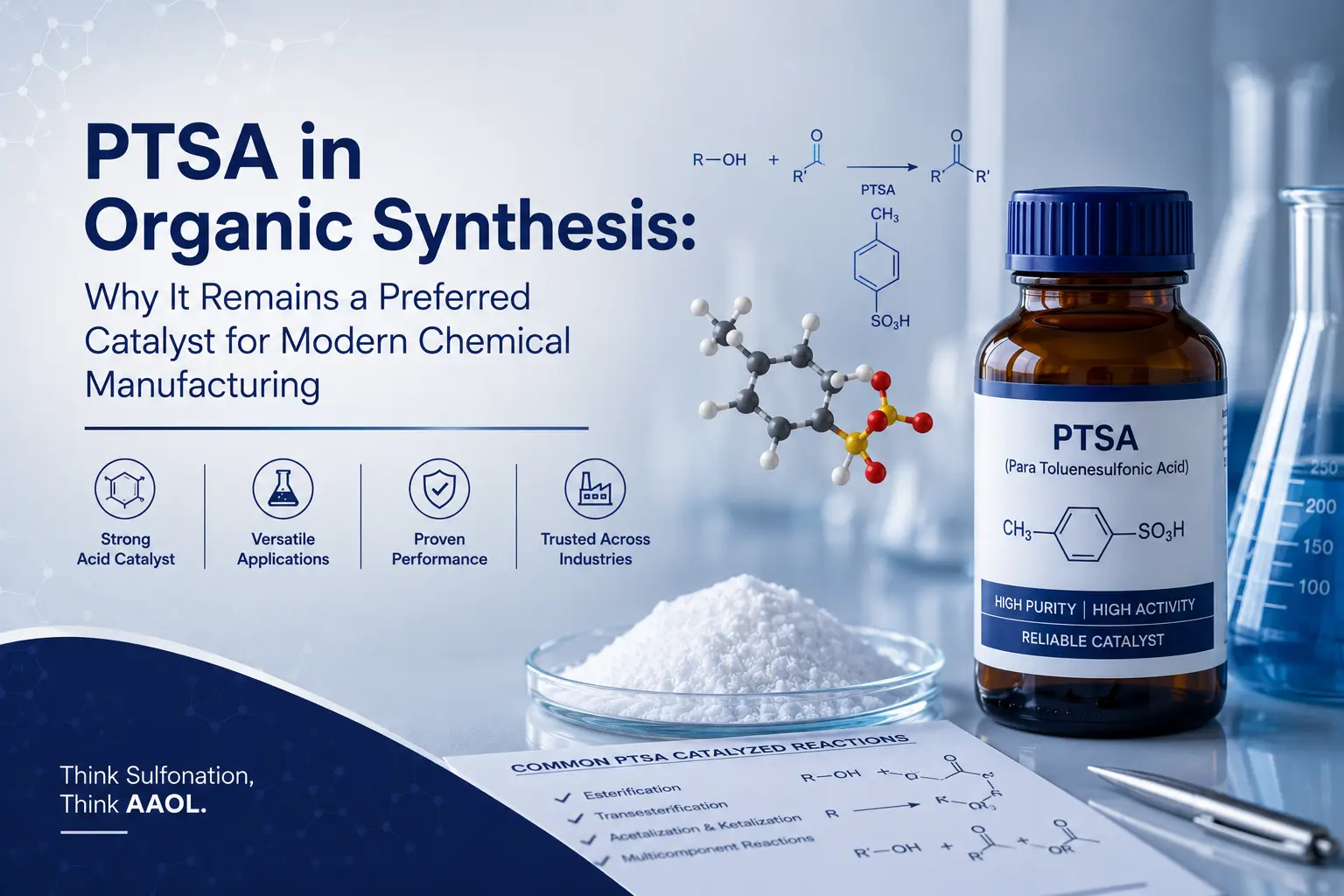
PTSA in Organic Synthesis: Why It Remains a Preferred Catalyst for Modern Chemical Manufacturing

PTSA in Organic Synthesis has become increasingly important for pharmaceutical manufacturers, specialty chemical producers, and contract synthesis companies. Known for its strong acidity, ease of handling, and catalytic efficiency, p-Toluenesulfonic Acid (PTSA) supports a wide range of reactions, from esterification and

READ MORE
What-is-Para-Toluenesulfonyl-Chloride-PTSC-and-How-is-it-Used-in-Organic-Synthesis-Banner-Image

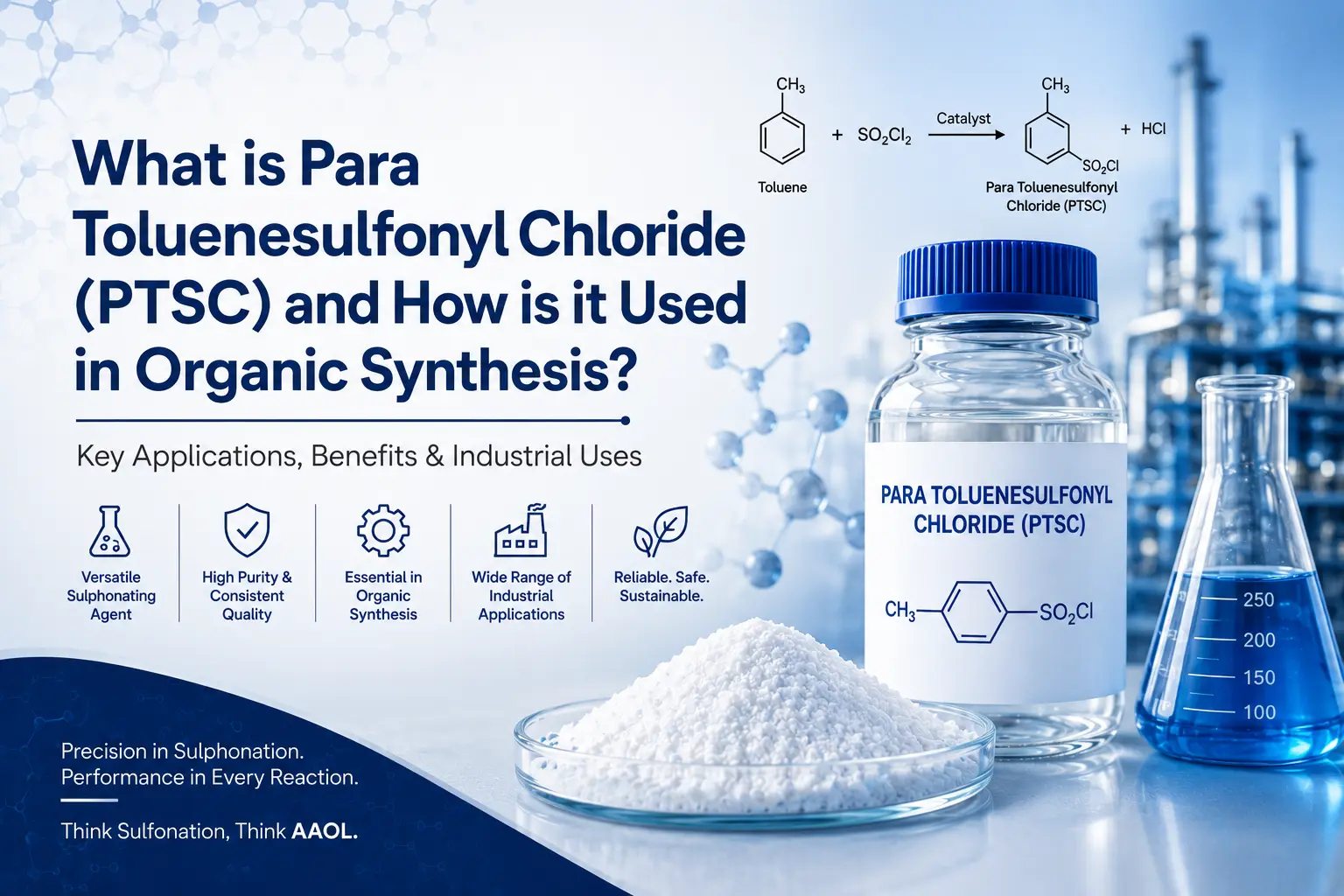
What is Para Toluenesulfonyl Chloride (PTSC) and How is it Used in Organic Synthesis?

Para-Toluenesulfonyl chloride (PTSC) is a chloro derivative of toluene. P-toluenesulfonyl chloride formula (C₇H₇ClO₂S), it is an off white to white crystalline solid commonly used in organic preparation. Structurally, 2 substituents, which are a methyl group (-CH3) and a sulfonyl chloride group

READ MORE